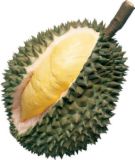
Fresh: Durians are sold whole, or the flesh removed from the fruit and placed in Styrofoam containers in segments, wrapped in clear plastic. The flesh is mostly eaten fresh, often out-of-hand.
Sometimes durian is simply boiled with sugar or cooked in coconut water, and it is a popular flavouring for ice cream. The Javanese prepare the flesh as a sauce to be served with rice; they also combine the minced flesh with minced onion, salt and diluted vinegar as a kind of relish; and they add half-ripe arils to certain dishes. Arabian residents prefer to mix the flesh with ice and syrup. The Malays also ferment in earthern containers and eat the fermented durian as a relish (tempoyak).
In Malaysia a popular durian cake, dodol, is made from durian mixed with coconut and palm sugar.
The seeds are eaten after boiling, drying, and frying or roasting. In Java, the seeds may be sliced thin and cooked with sugar as a confection; or dried and fried in coconut oil with spices for serving as a side-dish.
Young leaves and shoots are occasionally cooked as greens. Sometimes the ash of the burned rind is added to special cakes.
Processed: Durian flesh is canned in syrup for export in Thailand. It is also dried for local use and export. Blocks of durian paste are sold in the markets. In Bangkok much of the paste is adulterated with pumpkin. Malays preserve the flesh in salt in order to keep it on hand the year around to eat with rice, even though it acquires a very strong and, to outsiders, a most disagreeable odour. The unripe fruit is boiled whole and eaten as a vegetable. |