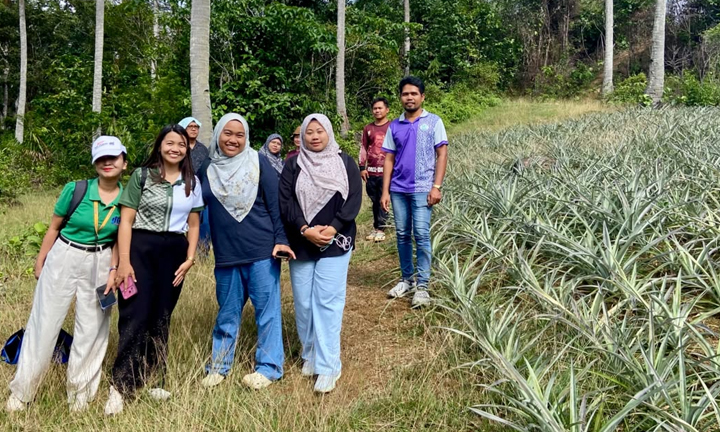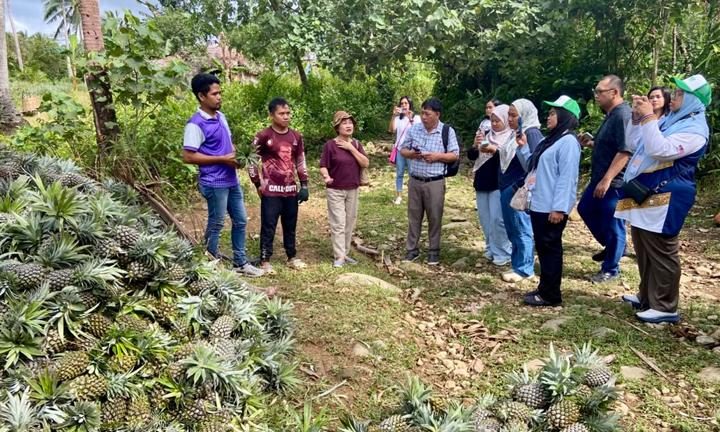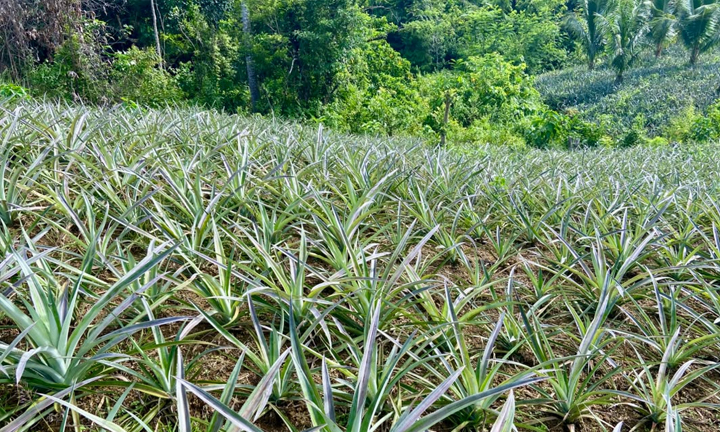
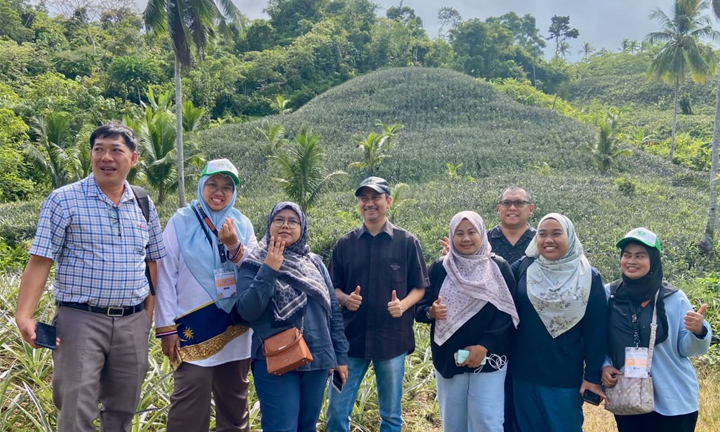
Delegates of the 2nd International Congress on Pineapple (ICOP 2026) visited a queen pineapple farm in Basud, Camarines Norte, Philippines during a field trip organized by the University of Camarines Norte on 10 September 2026.
In the Philippines, queen pineapple is only grown in the Bicol Area and Eastern Visayas Region. Most farms grown sweet cayenne varieties, including the MD2. Queen pineapple was introduced in Camarines Norte in the 1950s as an intercrop to coconut.
The farm is owned by Mr. Joven de Jesus, president of the Basud pineapple farmers association. The delegates were welcomed and guided by Mr. Joseph Buising, Municipal Agriculture Officer, Basud.
The farm produces 2,500-3,000 fruits per week, directly supplying produce to LCC Supermarkets located in the Bicol Area. With a planting density of 30,000-45,000 plants per hectare, the farm is capable of annually producing 20-25 tons per hectare.
Minimal fertilizer is applied, because the soil is rich in potassium and phosphorous. Nitrogen is sometimes utilized but rainfall can capture nitrogen from the air, reducing the need for fertilizer. After two to three harvest cycles, the land is left fallow to recover essential nutrients.
Farmers only rely on rainfall for watering, as it is too costly to install irrigation systems. Natural rainfall is usually enough to sustain the crops.
According to Dr. Arlene Alegre, Director of the Queen Pineapple Research and Development Center (QPRDC), smallholder farms under one hectare experience higher loss rates due to difficult farm topography and transport distances to collection areas.
Farmers often dump their harvest into a pile on the ground, which leads to bruising of the product. Dr. Alegre’s team has introduced the use of crates in harvesting and transporting to reduce physical damage.
Other loss mitigation measures that have been introduced include low-cost cooling at a temperature of 8-12 degrees Celsius and training farmers on proper harvesting time, careful transit methods, and strict adherence to training standards.