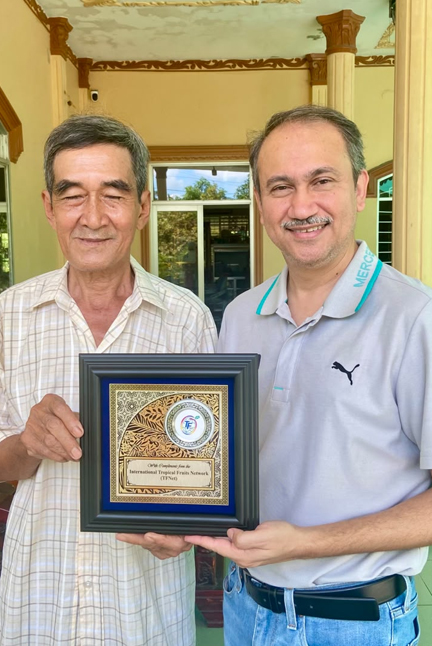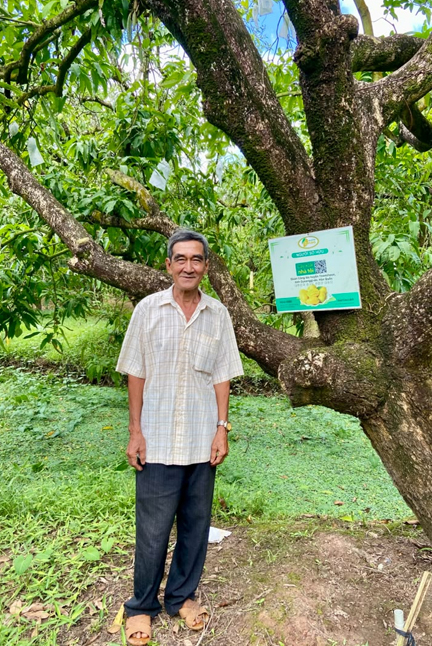
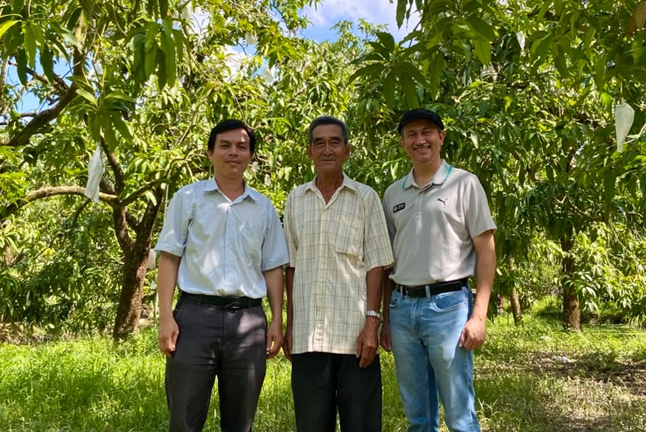
Mr. Muhamed Salim bin Mohd Ali, Chief Executive Officer of the International Tropical Fruits Network (TFNet), visited the mango farm of Mr. Nguyen Van Mach in My Xuong, Dong Thap, accompanied by Dr. Huỳnh Thanh Lộc, Deputy Director of the Centre for Technology Transfer at the Southern Horticultural Research Institute (SOFRI).
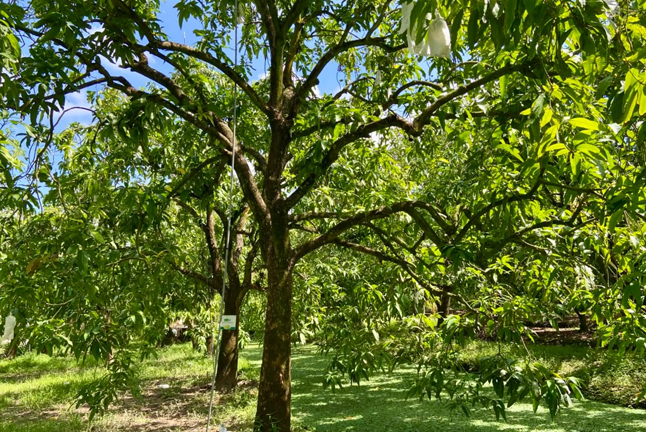
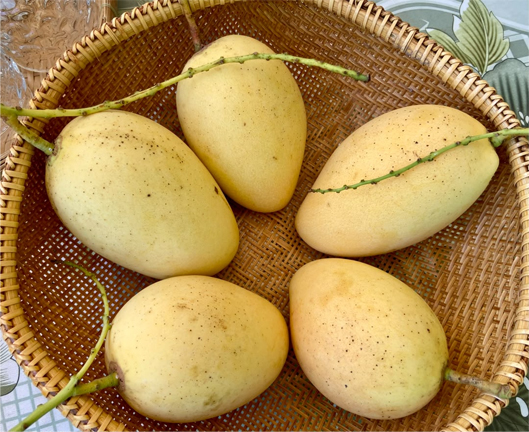
Located in the Mekong Delta, Dong Thap is one of Vietnam’s major mango-producing provinces. My Xuong is a well-established mango-growing area, known for Cat Chu and Cat Hoa Loc varieties. Mr. Mach’s 0.8-hectare farm is planted exclusively with Cat Chu mango, which he has cultivated for more than 30 years.
Mr. Mach said Cat Chu is less sweet than Cat Hoa Loc, but is well suited to export markets and has a longer shelf life and lower susceptibility to disease. At his farm, the main harvest season is May and June. He reported yields of around 18 to 25 tonnes per hectare, with prices averaging VND25,000 per kilogram, or approximately US$1, although prices fluctuate between the high and low seasons.
Mr. Mach is a member of the My Xuong Mango Cooperative, which he said has around 80 members cultivating more than 40 hectares. The cooperative assists members with marketing their fruit and helps reduce production costs, including fertiliser costs. It also supports the adoption of production practices that can help growers meet market requirements.
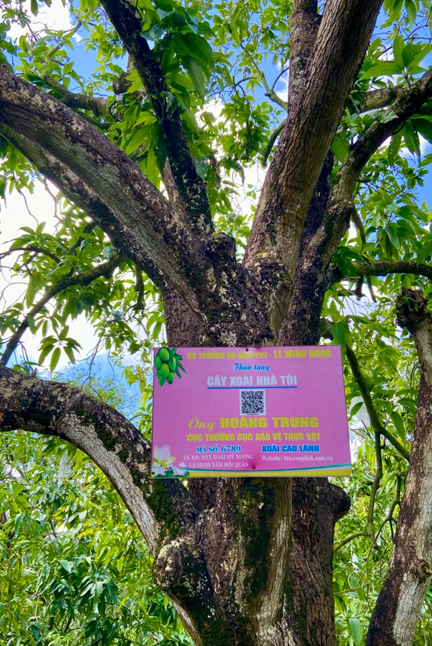
The cooperative’s “My Home Mango Tree” initiative allows customers to lease a mango tree for around US$300 a year. A tree can produce up to 100 kilograms of fruit annually, depending on conditions, and the farmer continues to care for the tree and helps harvest its fruit. The model offers customers a direct connection to a particular tree and, in some cases, the opportunity to visit the orchard and experience mango production. The annual fee is therefore better understood as a premium customer-engagement and farm-experience offer than as a way to buy mangoes cheaply. At the reported maximum yield of 100 kilograms, US$300 is equivalent to US$3 per kilogram—compared with the farm’s reported average price of about US$1 per kilogram.
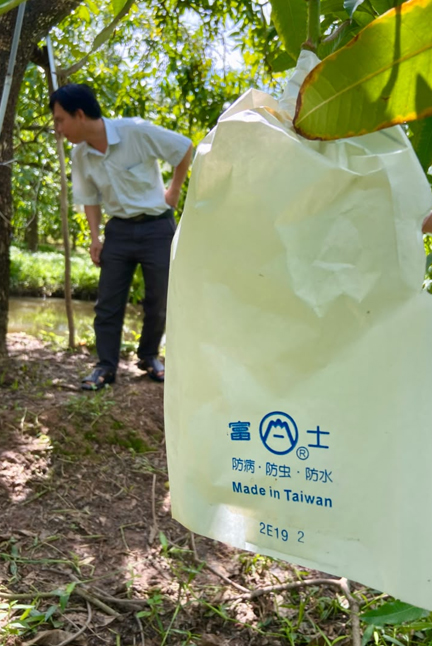
Alongside fruit bagging, Mr. Mach follows organic-oriented production practices and participates in a Participatory Guarantee System (PGS). PGS uses participation and peer monitoring to support production standards. Japan has supported organic agriculture training and PGS development in Dong Thap; Vietnam’s PGS is a national system for small-scale organic production.
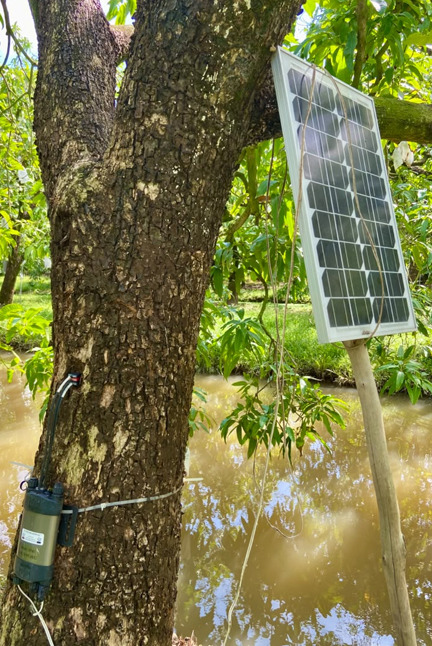
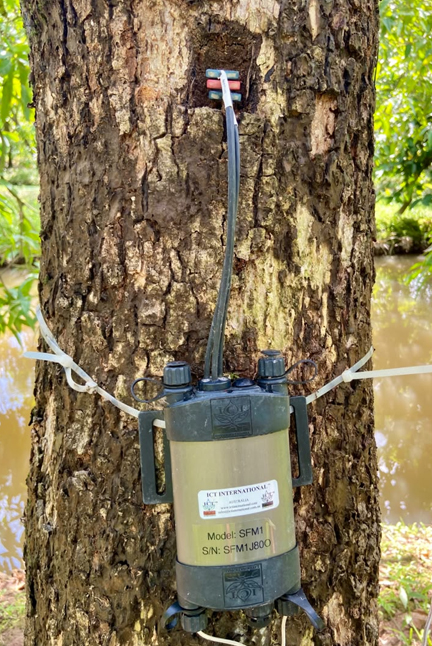
The farm also uses an Australian-made ICT International SFM1 Sap Flow Meter, installed on a mango tree and powered by solar energy. The instrument measures sap movement through the tree to monitor plant water use. Its readings can help inform orchard management; it does not directly measure nutrient needs.
Mr. Mach has welcomed international visitors from Japan, Laos, Thailand and Cambodia. His farm demonstrates how cooperative marketing, customer engagement, organic-oriented practices and solar-powered monitoring technology can complement traditional mango production in Dong Thap.