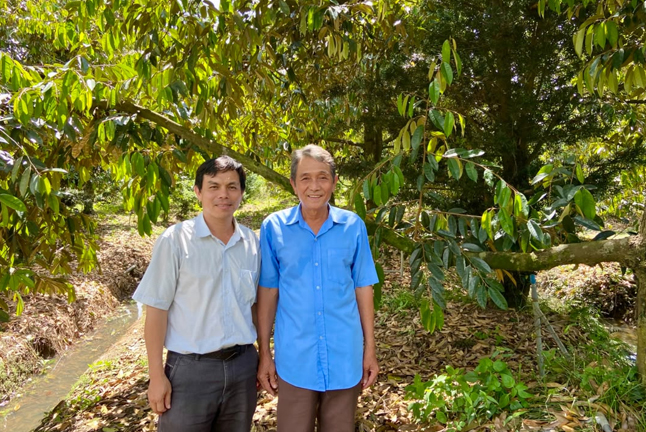
In Ngu Hiep Commune, Dong Thap, Mr. Loc is growing two durian varieties for a market that increasingly depends on careful production and food-safety controls. His 1.5-hectare orchard has 360 trees: 216 Monthong and 144 Ri6. He reported annual production of around 20 tonnes. During the visit, the farmgate price was approximately VND80,000 (US$3.10) per kilogram for Monthong and VND40,000 (US$1.55) per kilogram for Ri6.
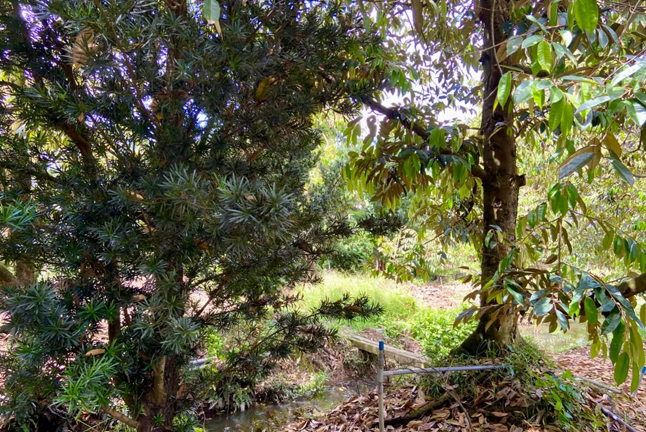
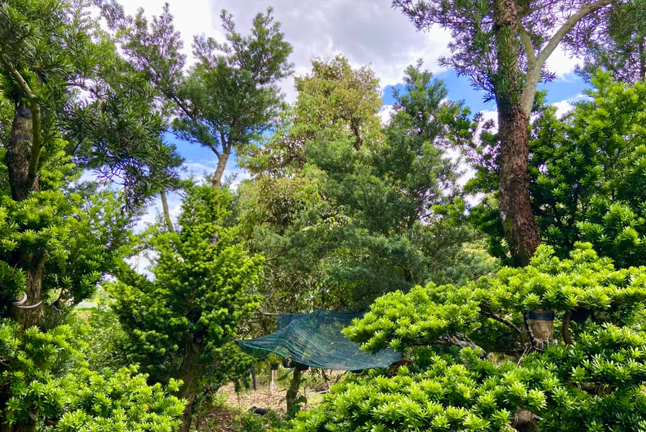
The orchard is also intercropped with several types of ornamental trees, providing an additional source of income alongside durian production.
Mr. Loc is a member of the Ngu Hiep Cooperative, which he said has around 100 members cultivating about 80 hectares. The cooperative helps market members’ fruit and buys produce directly from them, strengthening links between growers and buyers. Ngu Hiep is a long-established durian-producing area, and cooperatives help organise production and marketing for export markets.
China is a major destination for Vietnamese durian, but access depends on meeting food-safety and traceability requirements. Cadmium testing has become a particular concern for exporters. Mr. Loc said he follows the production protocol set by the provincial agriculture department in coordination with private-sector partners. This reflects the importance of managing cadmium risks throughout production and the supply chain.
Mr. Loc also induces flowering to produce an off-season crop. This practice can help spread harvests beyond the main season and respond to market demand, although results and prices depend on production conditions and market timing.
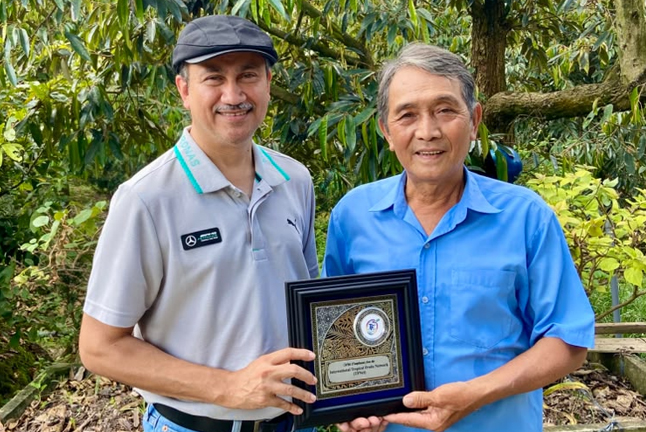
The orchard was visited by Mr. Muhamed Salim bin Mohd Ali, Chief Executive Officer of the International Tropical Fruits Network (TFNet), accompanied by Dr. Huỳnh Thanh Lộc, Deputy Director of the Centre for Technology Transfer at the Southern Horticultural Research Institute (SOFRI). The visit provided an opportunity to learn how a grower and cooperative are combining varietal production, intercropping, coordinated marketing, export protocols and off-season cultivation to serve domestic and international markets.