
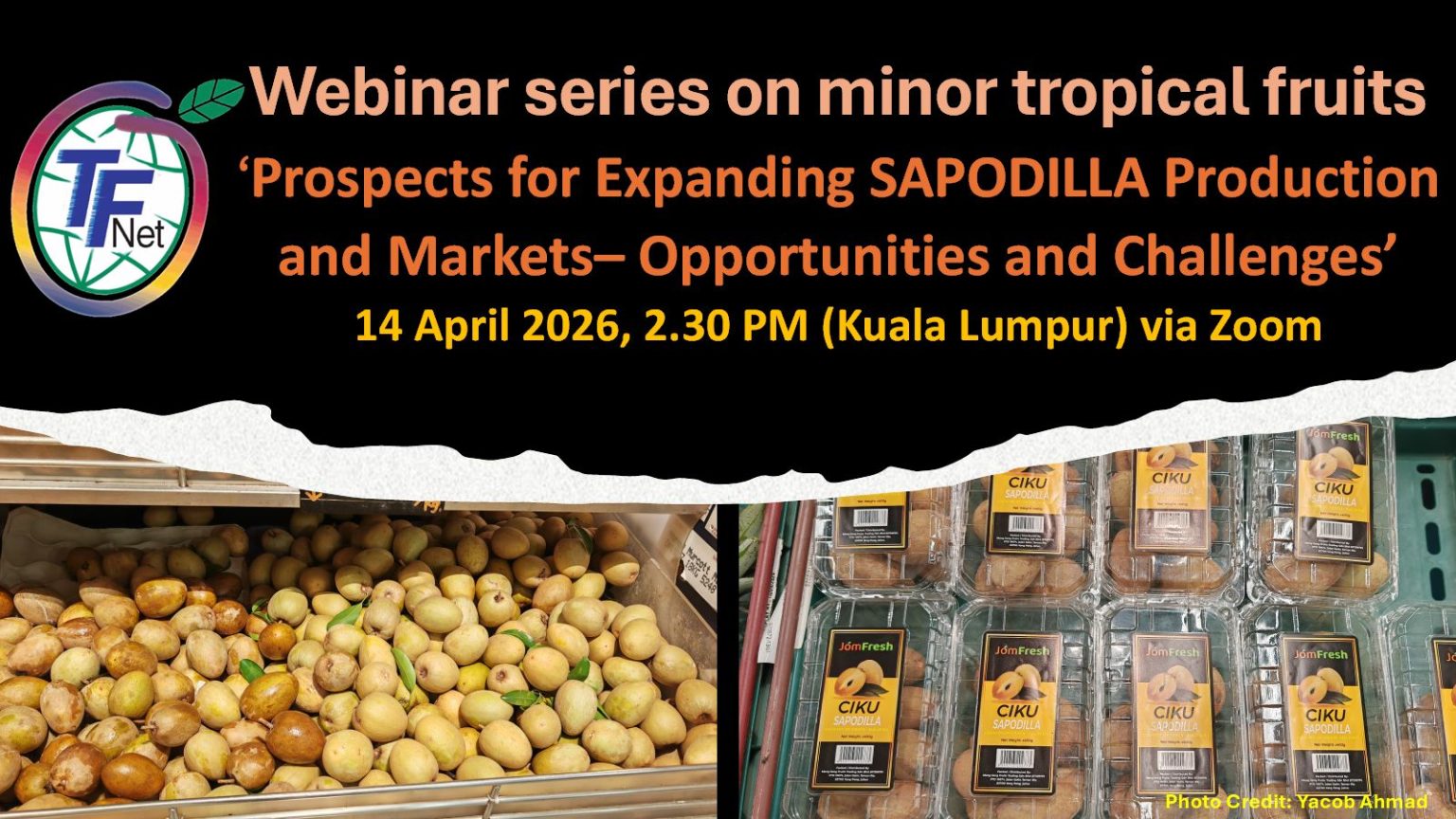
Sapodilla, also known as Sapota and Chiku (Manilkara zapota L) is a minor tropical fruit that is gaining popularity and has strong potential for further development. This evergreen, slow growing tree belongs to the Sapotaceae family. Native to Mexico and Central America, the tree thrives in the humid tropics and is also adaptable to subtropical regions and drier areas, tolerating various soil types, including waterlogged conditions. The fruit is popular in Mexico, Brazil and across Asia and Southeast Asian including India, Bangladesh, Pakistan, Vietnam, Thailand, Indonesia, Philippines and Malaysia. It can also be cultivated in hotter regions like Saudi Arabia. India is the largest producer and exporter of the fruit, followed by other exporters including Brazil, Mexico, Thailand, Indonesia and Vietnam.
The yellowish-brown fruit is a large berry of 4 – 8 cm diameter with weight ranging between 100 to 500 grams depending on variety. It consists of light brown or reddish pulp which is sweet and flavourful with some granular texture. Raw fruits are hard and exudes latex at the pedicel point when picked. The fruit is climacteric and is highly perishable, which requires harvesting at the right maturity index and proper postharvest management. The main marketing challenge is that the fruit ripens in less than a week after harvest and has a short storage life.
Due to its richness in antioxidants, vitamins and minerals, sapodilla has potential for processing into a functional beverage.
Commercial varieties of the sapodilla have been developed and are normally distinguished by their fruit size, skin, flesh colour and taste. Commercial planted areas generally follow a traditional mixed cropping system together with other fruit types, although some farms cultivate sapodilla as a monocrop.
Despite being a hardy plant and relatively easy to cultivate, sapodilla production faces several challenges including varietal selection, pests and diseases, poor postharvest handling and shelf life, and maintaining consistent yields. Reports indicate that pests and diseases significantly affect tree productivity and fruit quality.
Currently, export market opportunities are constrained by limited production levels. However, the fruit shows strong potential as a viable commercial fruit crop, especially with rising market demand for exotic and healthy fruits. Supporting this potential are advancements in research, the adoption of best agricultural practices, and a shift from backyard cultivation to commercial farming. Consumer demand is expected to grow further as the sector benefits from the development of improved varieties, better farming practices, innovations, stricter food safety and quality standards and enhanced postharvest management, better packaging, more efficient supply chains and the use of digital marketing tools.
Foreseeing the growing interest and demand for the fruit, and keen to explore its development in main producing countries, International Tropical Fruits Network (TFNet) is organizing a webinar on ‘The Prospects for Expanding Sapodilla Production and Markets – Opportunities and Challenges’ on Tuesday 14 April 2026 at 2.30 PM (Kuala Lumpur time) on the Zoom platform.
The objectives of the webinar are:
- To facilitate information sharing among tropical fruit researchers, producers, processors and exporters on the current production, processed products, market trends and challenges in developing the fruit in key producing countries including India, Bangladesh, Vietnam and Indonesia.
- To share information among stakeholders on the various initiatives that can enhance sapodilla production and markets, such as varietal development, best farm practices, postharvest management, research and development focus and supportive policies.
- To discuss initiatives in enhancing the visibility of sapodilla in global markets.
- To establish networking ties among sapodilla and other tropical fruits stakeholders.
The webinar is expected to provide insight into common varieties, best practices, pest and disease control, quality standards, processing options, demand and market in countries that are developing sapodilla. The speakers for the event are from Bangladesh, India, Indonesia and Vietnam.
| Time | Content | ||
| 02.30 – 02.40 PM | Introduction Mr. Muhamed Salim Mohd Ali, CEO, International Tropical Fruits Network (TFNet) |
||
| 02.40 – 04.15 PM | PRESENTATIONS Moderator: Mr. Yacob Ahmad, International Tropical Fruits Network |
||
 |
The Status of Sapodilla Production and Market Expansion in India
Dr. Yatin Tandel |
||
 |
Developing Sapodilla Production and Market Expansion in Indonesia
Prof. Dr. Darda Efendi |
||
 |
Production and challenges in Sapodilla production and market expansion in Bangladesh
Dr. Most. Marufa Khatun |
||
 |
Sapodilla Production and Market Expansion – the Vietnam Experience
Dr. Nguyen Thi Kim Thoa |
||
| 04.15 – 04.20 PM | Q & A, Panel discussion Moderator: Yacob Ahmad (TFNet) Panel: All speakers Topic: Challenges and opportunities in developing Sapota for the global market |
||
WEBINAR DATE: 14 APRIL 2026 (TUESDAY).
Time: 14.30 PM (Kuala Lumpur), 12.00 PM (Delhi) 12.30 PM (Dhaka), 13.30 PM (Ho Chi Minh City, Jakarta)
To participate in the webinar, please register at:
Registration link: https://us06web.zoom.us/meeting/register/xk6b61KRR2OFH1CTP2n9eQ
After registering, you will receive a confirmation email containing information about joining the meeting.