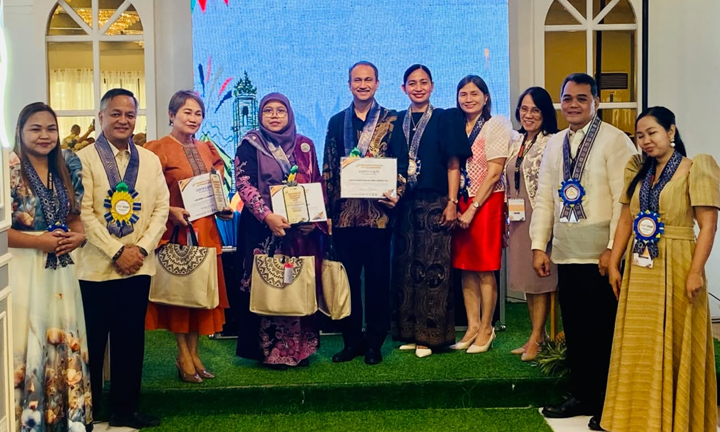
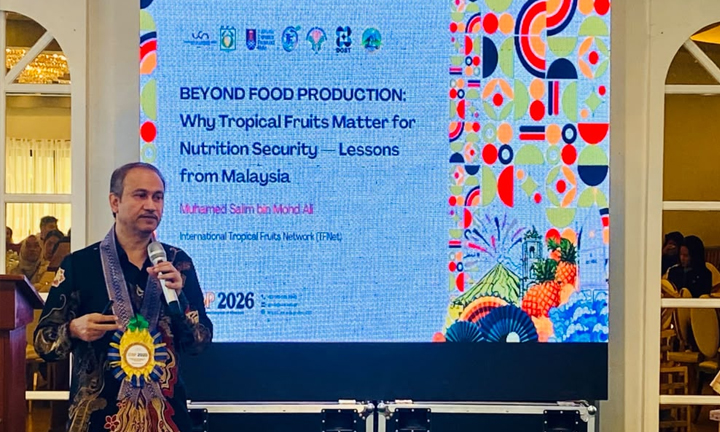
TFNet CEO Mr. Muhamed Salim bin Mohd Ali delivered the first keynote address at the International Congress on Pineapple (ICOP) 2026. His presentation, entitled “Beyond Food Production: Why Tropical Fruits Matter for Nutrition Security – Lessons from Malaysia,” examined the need to look beyond food production and place greater emphasis on nutrition security.
“Despite improvements in agricultural production, billions of people worldwide remain unable to afford a healthy diet due to persistent challenges related to food affordability, accessibility and quality,” said Mr. Salim.
His presentation highlighted the distinction between food security and nutrition security. While global efforts have traditionally focused on increasing agricultural production and ensuring an adequate food supply, greater attention must also be given to whether people can access, afford and consume nutritious food.
Tropical fruits play an important role in strengthening nutrition security, as they provide essential vitamins, minerals, dietary fibre and bioactive compounds that support human health and well-being.
Recognising the importance of fruits, the Government of Malaysia has introduced various interventions, including subsidies, extension services, infrastructure development, research and development initiatives, market facilitation and social protection programmes to strengthen the competitiveness of the fruit sector.
Mr. Salim also proposed a framework for assessing the operational efficiency of these programmes, with the aim of improving productivity, increasing the accessibility and affordability of nutritious food, and encouraging greater consumption of tropical fruits.
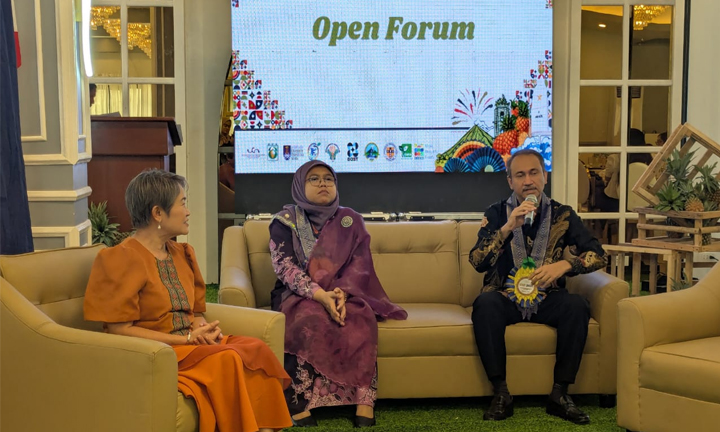
The Congress also featured three other distinguished keynote speakers:
* Dr. Arlene Alegre, Director of the Queen Pineapple Research and Development Institute, who presented “Challenges in the Queen Pineapple Value Chain: The Case of Camarines Norte”;
* Dr. Zaiton Sapak, Associate Professor at Universiti Teknologi MARA, Malaysia, who presented “Shaping the Future of the Global Pineapple Industry: Plant Health, Climate Resilience, and Sustainable Innovation”; and
* Dr. Julius Leaño Jr., Director of the DOST–Philippine Textile Research Institute, who discussed “Revitalization of the Philippine Textile Ecosystem.”
The keynote session brought together diverse perspectives on nutrition security, sustainable production, plant health, value-chain development and innovation. Collectively, the presentations underscored the importance of collaboration, research and effective policy implementation in building a more resilient, inclusive and sustainable tropical fruit industry.