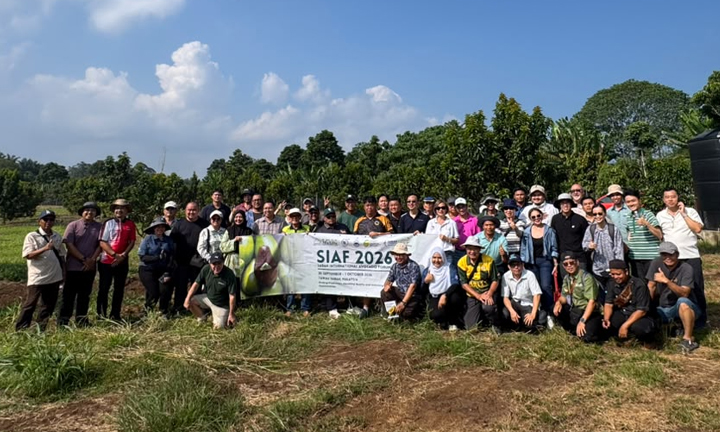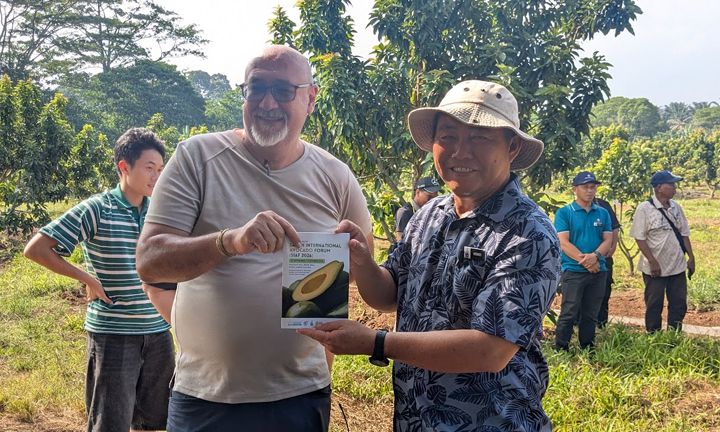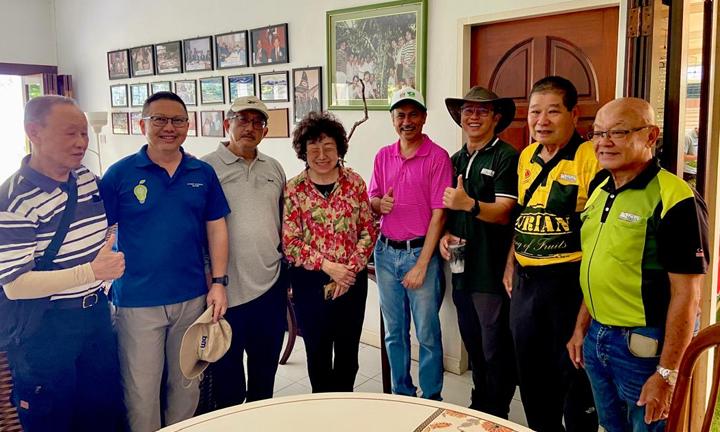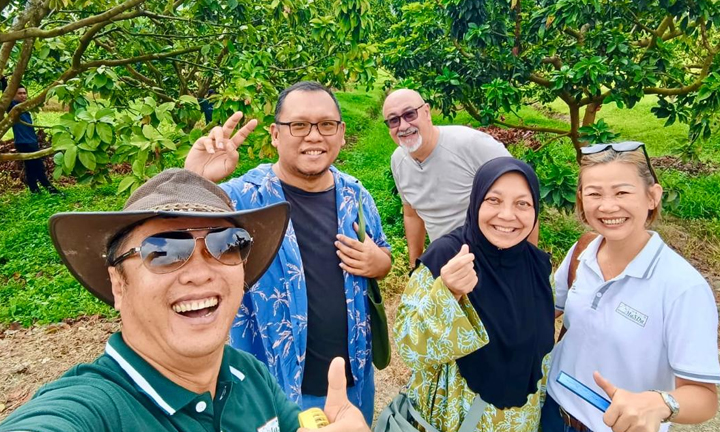
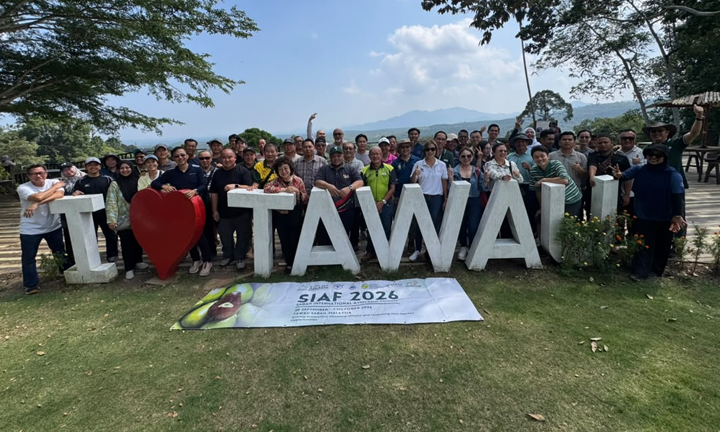
Participants of the Sabah International Avocado Forum 2026 (SIAF 2026) visited avocado farms and research facilities in Tawau, Sabah, on 1 October. The field trip provided an opportunity to learn about local production, farm management and ongoing research into varieties suited to the region.
SIAF 2026 was organised by the Sabah Durian and Tropical Fruit Planters Association (MaSDA) and co-organised with the International Tropical Fruits Network (TFNet). The forum was supported by the Sabah Ministry of Agriculture, Food and Fisheries Industry (MAFFI), the Sabah Department of Agriculture, Sabah Convention Bureau and RealStrong.
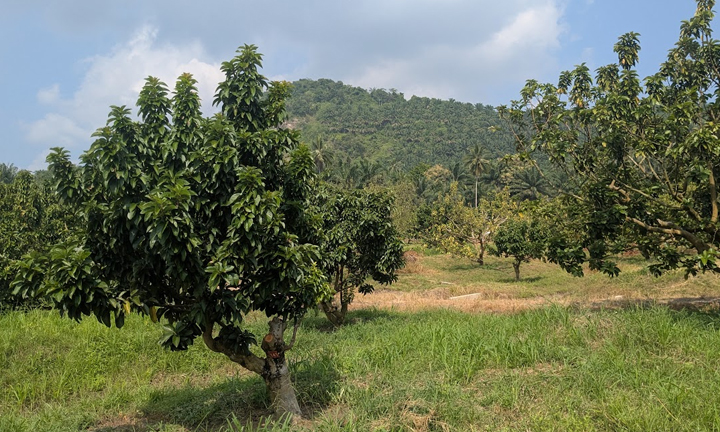
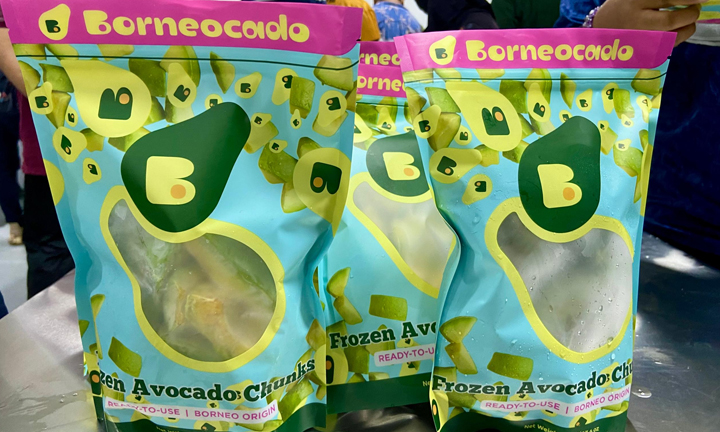
The first stop was an avocado farm owned and operated by Borneocado. Ben Tee, one of the owners, said the six-year-old orchard has around 500 trees of the Quoin Avocado 1 (QAV1) variety.
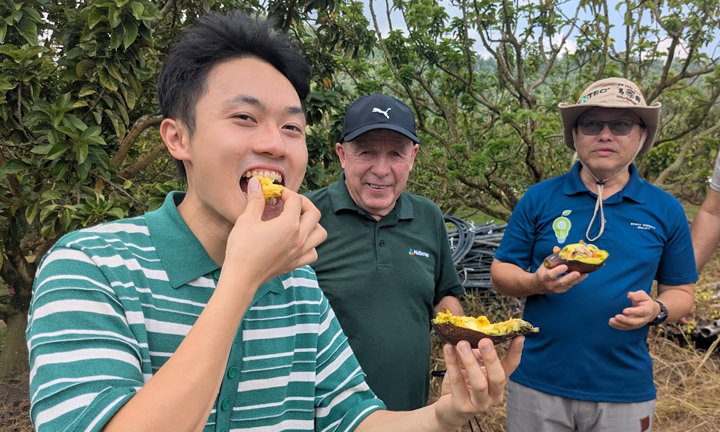
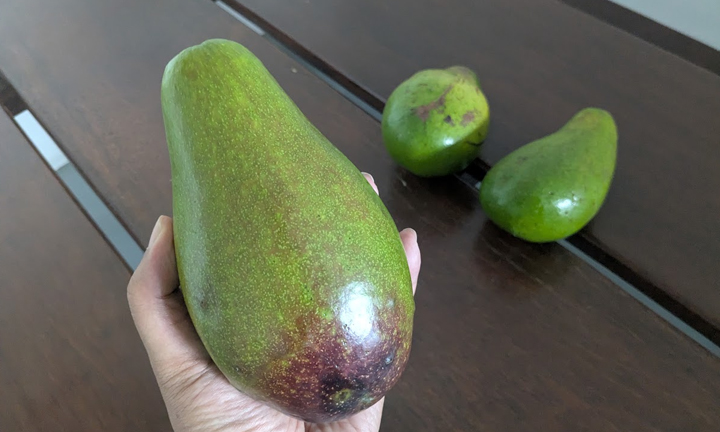
Marketed as the “Green Gold of Borneo”, QAV1 is a premium variety known for its large fruit, which can weigh up to 0.5 kilogram. It is prized for its rich, buttery and creamy texture and naturally sweet flavour. When ripe, the fruit develops a distinctive red colour.
According to Tee, the trees can be harvested twice a year, with each tree yielding about 100 kilograms of fruit per harvest. He explained that careful pruning, fertilisation and pest management are important to maintaining the orchard and supporting production.
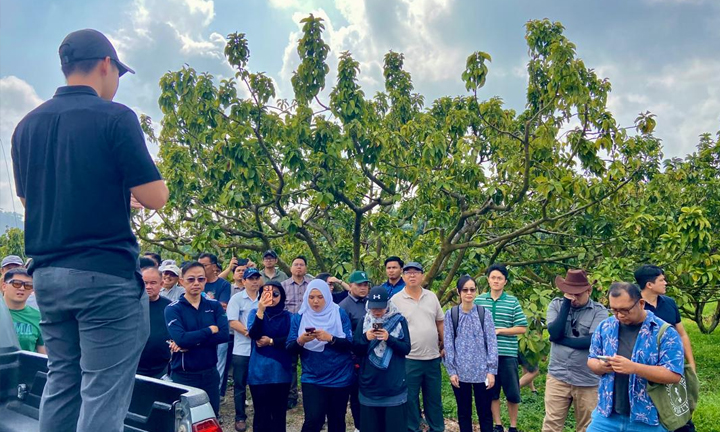
Avocado trees require plenty of water, but good soil drainage is essential to prevent waterlogging and reduce the risk of root rot caused by Phytophthora cinnamomi. To manage excess water, Borneocado is beginning to excavate trenches between the trees to improve drainage.
Avocado expert Dr Guy Witney also highlighted the potential use of potassium phosphonate to help protect trees from root rot and support stronger root growth.
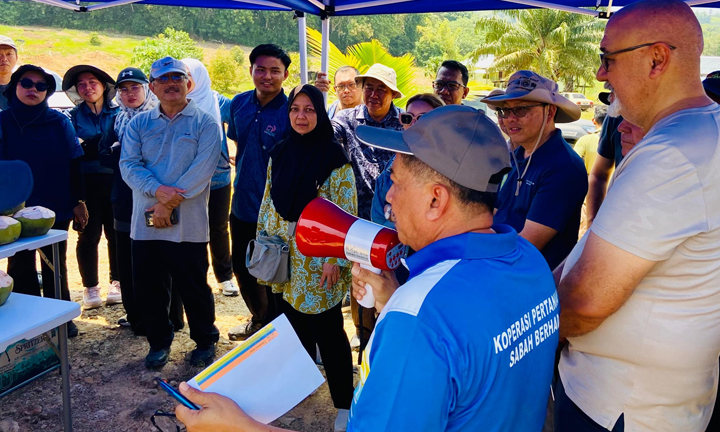
The next stop was a 4.09-acre farm managed by the Sabah Agriculture Cooperative. The farm grows a range of tropical fruits, including avocado, rambutan, durian and coconut.
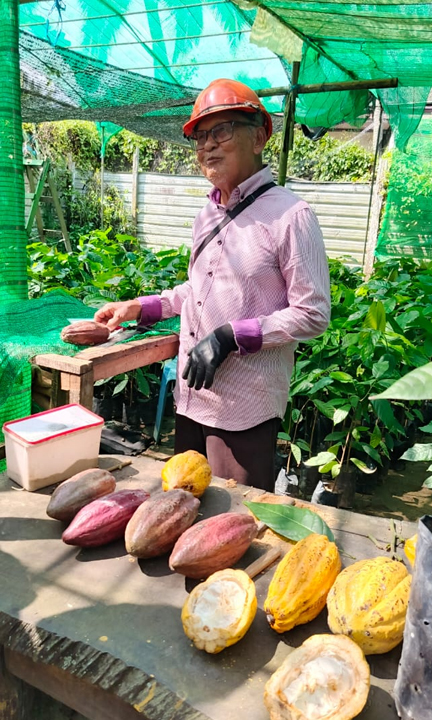
During the lunch break, participants visited a waterfall at Cocoa Culture Spring in Teck Guan Cocoa Village. They also received an introduction to cocoa production in Tawau and its importance to the local community and culture.
The final stop was Quoin Hill Research Centre, managed by the Sabah Department of Agriculture. The centre maintains 78 avocado accessions, which are evaluated for traits including growth, flowering, fruiting, taste and seed size.
The centre developed the QAV1 variety, named after Quoin Hill. Other promising selections from its breeding programme include QAV2 and QAV3, which share flavour and texture characteristics with QAV1.
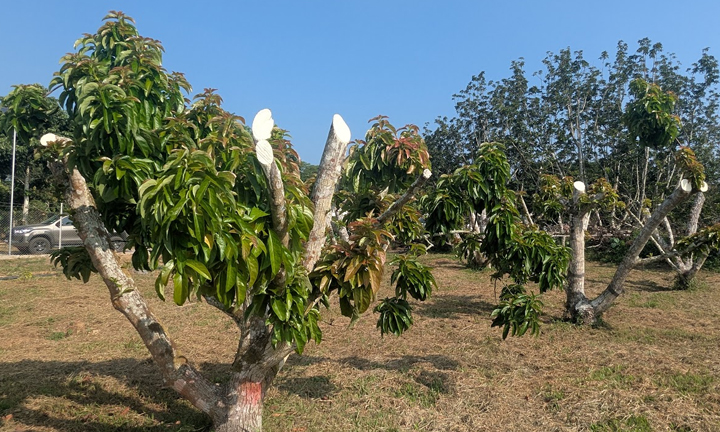
The research centre has dedicated three acres to 250 trees of released varieties. This planting helps maintain varietal identity and genetic purity, while providing planting materials for Sabah’s growers.
In addition to its breeding and selection programme, the centre conducts trials on pruning, canopy and orchard management, and varietal adaptation to different climatic conditions. It also supports capacity-building activities.
The field visit gave participants a closer look at the opportunities and practical challenges involved in developing Sabah’s avocado industry. For TFNet, it was also an opportunity to learn more about avocado farming and the wider value chain, with the aim of supporting production that is both sustainable and economically viable.
TFNet looks forward to building on the connections made through SIAF 2026 and exploring potential study visits with partners across its established network, including its 14 member countries. These exchanges can help growers, researchers and industry stakeholders share experience, strengthen technical knowledge and identify approaches suited to their local conditions.