Former captain of Fiji’s national rugby union team, Greg Smith, is embarking on a new chapter in agriculture, exploring innovative farming approaches that integrate agroforestry, intercropping, organic waste management and commercial crop production.
Together with his business partner, Mr. Smith is currently managing approximately 35 acres (14.2 hectares) of agricultural land in Mulomulo, located in the Nawaka District of Ba Province, Fiji.
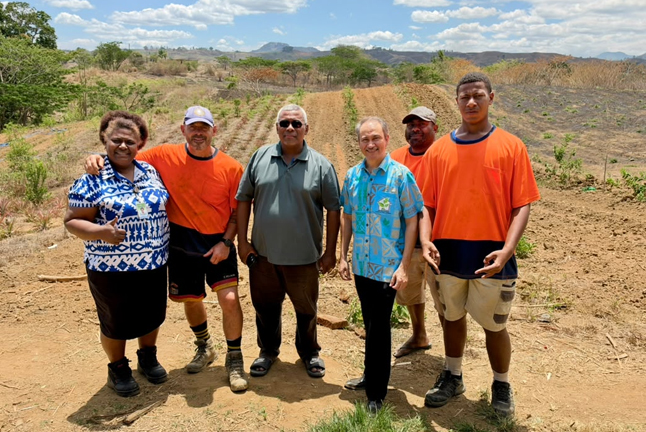
The Chief Executive Officer of the International Tropical Fruits Network (TFNet), Mr. Muhamed Salim Mohd Ali, visited the farm accompanied by Mr. Savenaca Cuquma, Principal Research Officer (Horticulture) and Head of the Nacocolevu Agriculture Research Station, who also serves as Vice-Chairperson of the TFNet Board of Trustees, and Ms. Atelini Kaloumaira, Area Field Officer for Nadi, from Fiji’s Ministry of Agriculture, Sugar and Waterways.
Mr. Smith, who made 46 international appearances for Fiji and captained the Flying Fijians, is now applying his experience and entrepreneurial spirit towards developing a sustainable and commercially viable agricultural enterprise.
Innovative planting beds and organic waste utilisation
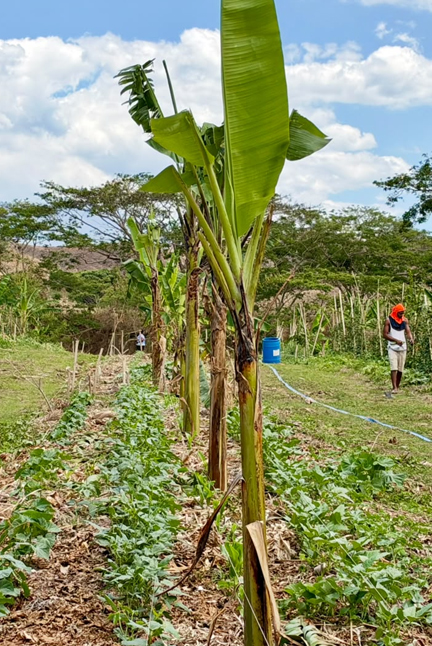
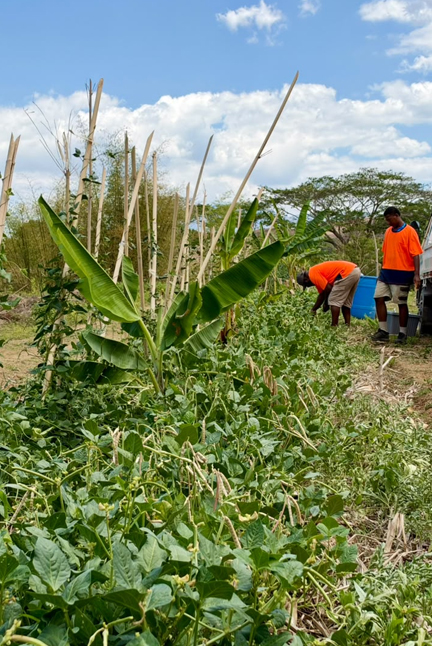
One of the interesting initiatives at the farm is an experimental planting bed system that utilises organic waste, including compost derived from market waste. The planting beds measure 25 metres by 3 metres and 50 metres by 3 metres, with green waste subsequently placed on top of the beds as mulch.
The approach is designed to improve soil structure, increase organic matter, enhance moisture retention and reduce water loss through evaporation. The utilisation of market and green waste also demonstrates the potential of circular agriculture, whereby organic materials that would otherwise be discarded are converted into valuable agricultural inputs.
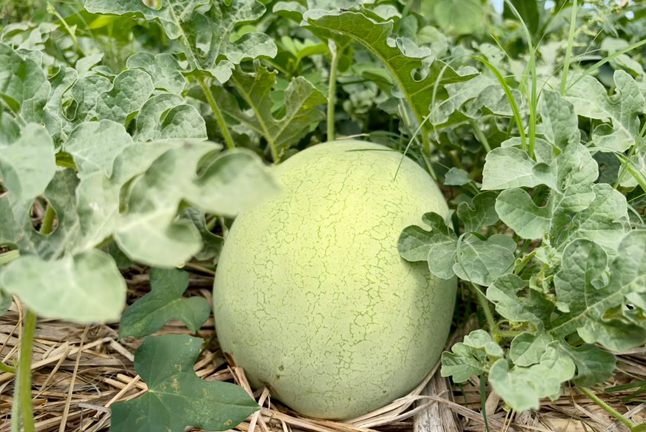
The trial currently involves the cultivation of cucumber, sweet corn, watermelon, long bean and cowpea within the same planting bed. Banana plants are incorporated into the system to provide partial shade and contribute to the farm’s diversified production system.
The inclusion of legumes such as cowpea and long bean may also contribute to soil fertility through biological nitrogen fixation, while the cultivation of crops with different growth characteristics and harvesting periods offers opportunities to diversify farm income.
According to Mr. Smith, the proposed commercial model envisages approximately 33 planting beds per hectare, with projected revenue ranging from FJD 3,000 (USD 1,310) to FJD 5,000 (USD 2,185) per bed. Based on these estimates, the system could potentially generate gross revenue of approximately FJD 150,000 (USD 65,550) per hectare under favourable production and market conditions. As the system remains at the experimental stage, its commercial performance will need to be assessed over successive production cycles.
Alley cropping for tropical fruit production
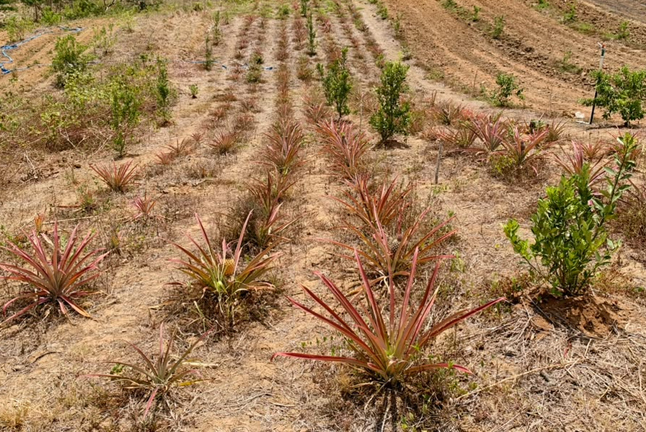
On a separate plot of land, Mr. Smith has commenced the establishment of an alley cropping system involving citrus and pineapples, with plans to cultivate approximately 3,000 pineapple plants and 400 citrus trees.
The system allows shorter-duration crops to be grown between rows of fruit trees, enabling more efficient utilisation of available land while providing opportunities to generate income before the citrus trees reach commercial maturity.
Pineapple, with its relatively compact growth habit, offers an interesting option for integration into such diversified fruit production systems, particularly during the establishment phase of citrus orchards.
Mr. Smith is also cultivating turmeric using the alley cropping approach, further diversifying the farm’s agricultural activities. In addition, four varieties of sweet potato, locally known as kumala, are being grown on the farm.
Government support and sustainable agricultural development
The farm has benefited from support provided by Fiji’s Ministry of Agriculture, Sugar and Waterways, particularly through access to seeds at reduced prices and assistance with water pumps and water storage tanks to support irrigation requirements.
Such assistance is particularly important in Fiji’s Western Division, where prolonged dry periods and increasingly unpredictable rainfall can affect agricultural productivity. Farming practices that improve soil moisture retention, together with investments in irrigation infrastructure, can help strengthen resilience against these challenges.
Agroforestry has long been practised in Fiji and is increasingly gaining recognition for its potential to address contemporary agricultural challenges, including climate change, soil degradation, biodiversity loss and the need to diversify farmers’ income.
The initiatives undertaken by Mr. Smith demonstrate how traditional agricultural principles can be combined with modern farming practices and commercial considerations to develop more resilient and resource-efficient production systems.
The field visit provided TFNet with an opportunity to gain further insights into Fiji’s ongoing efforts to promote sustainable agriculture, crop diversification and innovative farming practices at the farm level.
As Fiji is a valued member country of TFNet, the network will continue to explore opportunities for knowledge sharing and technical exchanges among its member countries, particularly in sustainable tropical fruit production, integrated farming systems and agricultural practices that contribute to food and nutrition security.