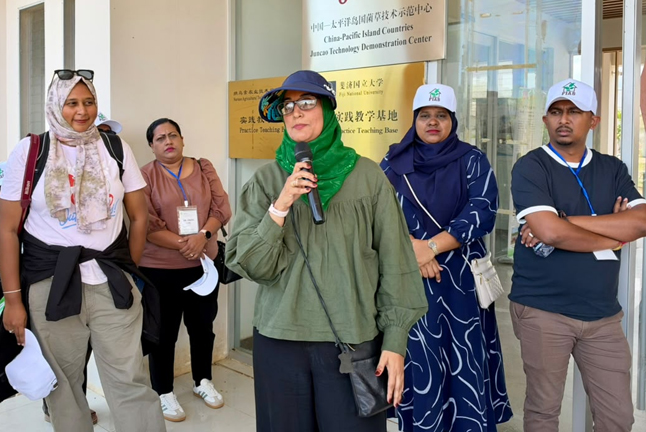
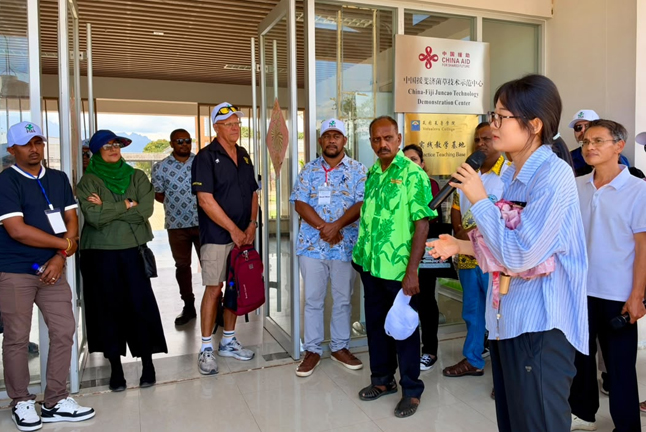
Following the National Agriculture Research Symposium, the Fiji Institute of Agricultural Science (FIAS) organised a field visit to Legalega Research Station, which operates under Fiji’s Ministry of Agriculture, Waterways and Sugar Industry. Delegates were welcomed by Ms Sufuawana Hussein, a Senior Research Officer with the Ministry, and Chinese counterparts involved in the Juncao programme.
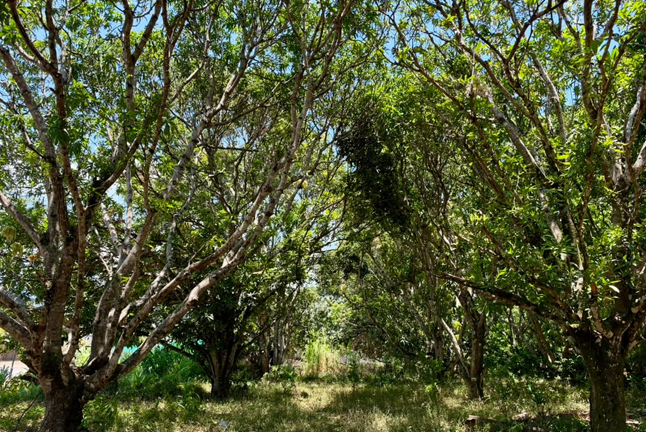
The visit introduced delegates to Legalega’s fruit collections and propagation work. The station maintains around 70 mango lines (22 local and 48 exotic) as well as 13 citrus varieties. Its collections also include breadfruit, mangosteen, abiu, black sapote and sapodilla, as well as indigenous fruit trees such as tavola, kavika and local almonds. Staff are exploring propagation methods to multiply planting material, and are interested in developing value-added products and encouraging people to include more fruit in their diets.
A key part of the visit was the station’s work under the China–Pacific Island Countries Juncao Technology Demonstration Center. China-supported Juncao cooperation in Fiji began in 2014, with a demonstration centre established at Legalega to introduce mushroom cultivation and train local growers. In March 2023, the China–Pacific Island Countries centre was established to extend the work and share the technology with other Pacific countries.
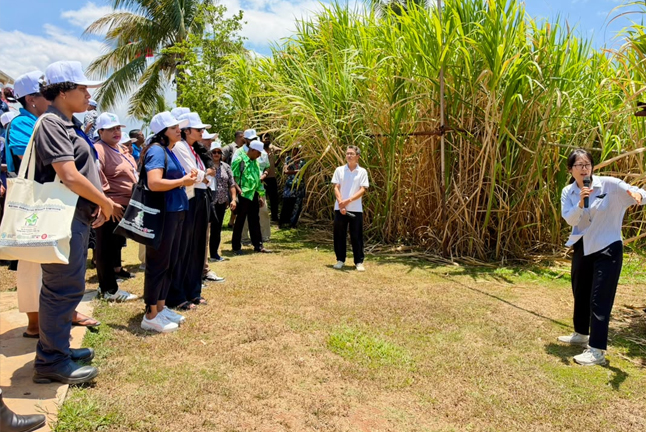
Juncao technology was developed in China in the 1980s by Professor Lin Zhanxi of Fujian Agriculture and Forestry University. It uses cultivated, chopped grass as a substrate for growing edible and medicinal mushrooms, offering an alternative to traditional wood-based materials such as sawdust. Giant Juncao grass can also be used as livestock forage and for soil protection.
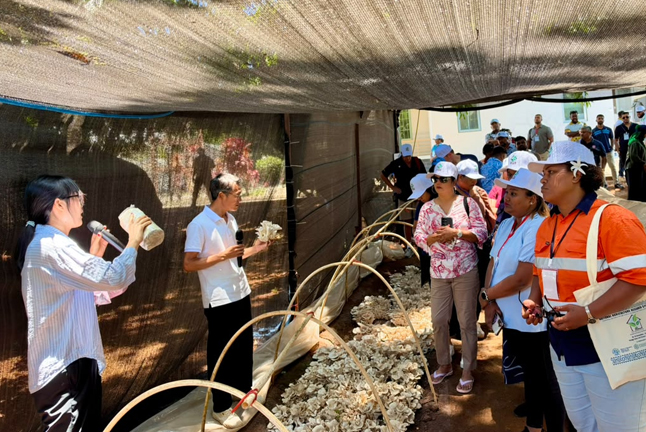
The demonstration at Legalega showed several production approaches, including year-round mushroom cultivation under forest canopy. Using the shade and cooler conditions beneath trees, growers can manage temperature and moisture with simple shelters and soil-cased techniques. The station’s display described cultivation of oyster mushrooms, wood ear and lingzhi, with different methods for producing mushrooms in shaded areas.
The collaboration is also extending beyond Legalega. Demonstration sites listed on the station’s display include Votualevu College, Navuso Agriculture Technical Institute, the Republic of Fiji Military Forces’ Force Training Group, and a site operated by Pure Produce in Saru Village. These sites are intended to build local capacity, including the ability to produce mushroom substrate bags. By February 2024, about 2,400 participants had reportedly received Juncao training through 52 sessions at Legalega.
The visit highlighted how the Ministry’s research station brings together fruit conservation, propagation, mushroom production and practical training. Together, these activities support efforts to diversify agricultural production, create value-added opportunities and encourage more varied diets.