
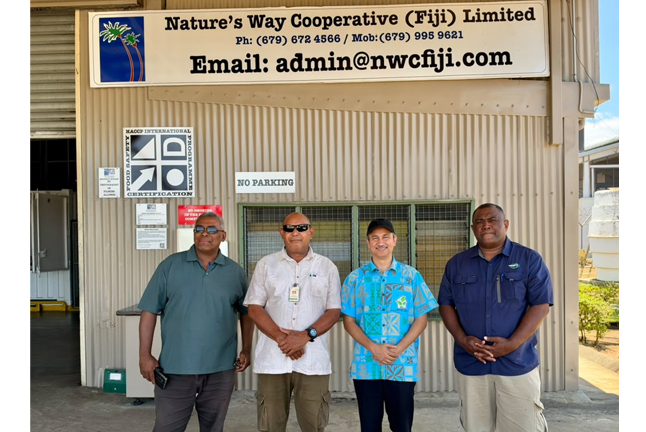
Nature’s Way Cooperative (Fiji) Limited (NWC), located in Nasoso, Nadi, plays an instrumental role in facilitating Fiji’s fresh agricultural produce exports through the provision of mandatory phytosanitary treatment for selected fruit fly host commodities destined for international markets.
Established in August 1995, the cooperative is Fiji’s sole provider of High Temperature Forced Air (HTFA) quarantine treatment services, supporting the country’s horticultural export industry, particularly in maintaining market access to New Zealand and Australia.
During a field visit to the biosecurity-approved treatment premises, the Chief Executive Officer of the International Tropical Fruits Network (TFNet), Mr. Muhamed Salim Mohd Ali, was briefed by Mr. Eremasi Ratumaitabuki, Station Officer of the Biosecurity Authority of Fiji (BAF).
The CEO was accompanied by Mr. Savenaca Cuquma, Principal Research Officer (Horticulture) and Head of the Nacocolevu Agriculture Research Station, who also serves as Vice-Chairperson of the TFNet Board of Trustees, and Ms. Atelini Kaloumaira, Area Field Officer for Nadi, from Fiji’s Ministry of Agriculture, Sugar and Waterways.
Phytosanitary treatment and market access
During the visit, Mr. Ratumaitabuki provided an overview of the facility’s operations, treatment procedures and regulatory requirements governing the export of fruit fly host commodities under Fiji’s Bilateral Quarantine Arrangements (BQA) with New Zealand and Australia.
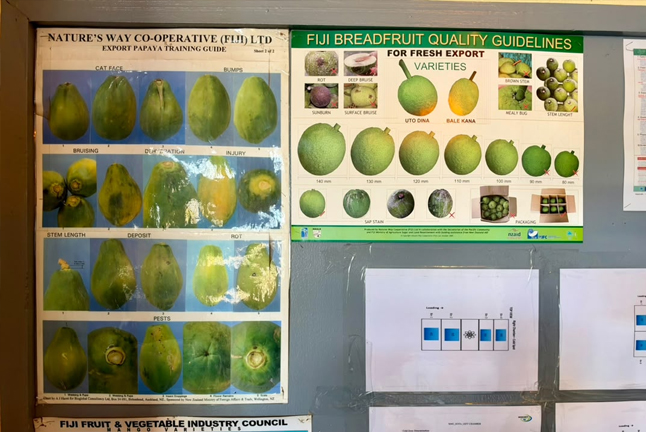
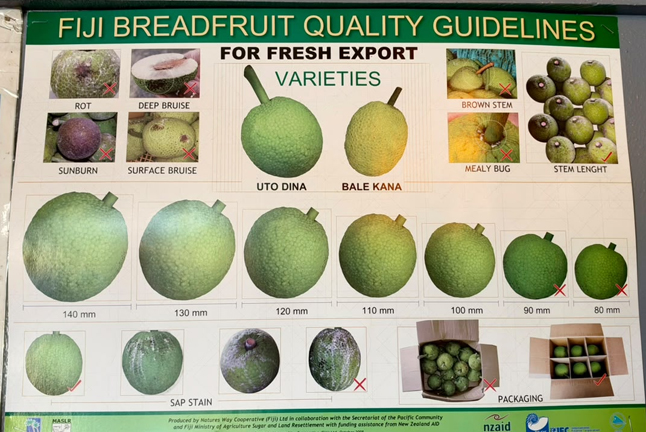
The facility primarily handles four commodities, namely eggplant, papaya, mango and breadfruit. These commodities are subject to mandatory HTFA treatment under the approved export pathways to New Zealand, while the facility also supports papaya exports to Australia.
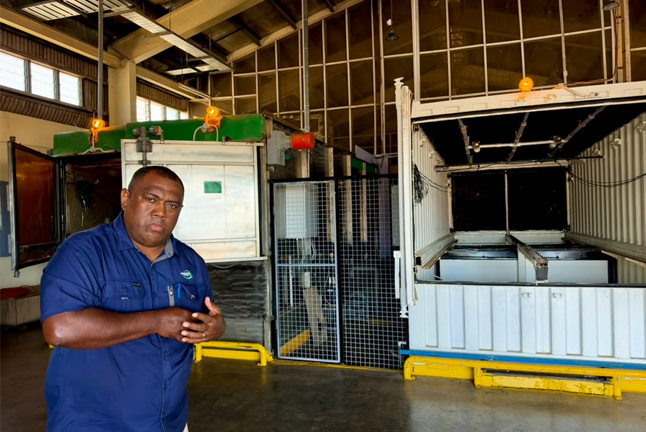
The HTFA system is a non-chemical phytosanitary treatment that uses heated, circulating air under carefully controlled conditions to eliminate fruit flies at different developmental stages without significantly compromising the quality of the produce.
The facility operates four HTFA treatment chambers, with specialised computer software supplied and certified by Quarantine Technologies International of New Zealand. The system allows treatment temperatures and other critical parameters to be monitored and recorded throughout the treatment process.
Among the commodities handled at the facility, eggplant accounts for the largest export volume, followed by papaya, mango and breadfruit, according to the briefing. Treatment operations are normally conducted five days a week, with no treatment undertaken on Thursdays and Sundays.
A sustainable cooperative business model
An interesting aspect of the facility is the institutional arrangement between Nature’s Way Cooperative and the Biosecurity Authority of Fiji.
While the cooperative is responsible for the day-to-day operations, including conducting the treatment, handling and packing of agricultural produce, BAF provides regulatory oversight and monitors compliance with established Standard Operating Procedures (SOPs), approved treatment protocols and the phytosanitary requirements of importing countries.
The cooperative operates on a fee-for-service business model, whereby exporters are charged according to the weight of produce treated. The treatment fees constitute the principal source of operating revenue for the cooperative, contributing towards its financial sustainability.
From its modest beginnings handling approximately 30 tonnes of papaya annually, the cooperative has developed into an established agribusiness handling around 500 tonnes of fresh produce annually. Its membership has also expanded from 30 members in 1995 to more than 370 by 2024, comprising predominantly smallholder farmers as well as exporters.
Apart from providing quarantine treatment services, the cooperative also undertakes research and extension activities, supplies agricultural inputs and facilitates linkages between farmers and exporters.
Strengthening Fiji’s horticultural export competitiveness
The cooperative has also benefited from international development assistance, including the Pacific Horticultural and Agricultural Market Access Plus (PHAMA Plus) Programme, supported by the governments of Australia and New Zealand. The partnership has supported the modernisation of the facility through improvements to its treatment equipment, computer software and operational procedures.
The Nature’s Way Cooperative model demonstrates how collaboration between government regulatory authorities, farmers, exporters and international development partners can contribute towards establishing sustainable agricultural export value chains.
The availability of internationally recognised phytosanitary treatment facilities is particularly important for tropical fruit-producing countries, as compliance with Sanitary and Phytosanitary (SPS) requirements remains a prerequisite for gaining and maintaining access to many international markets.
The visit provided TFNet with valuable insights into Fiji’s phytosanitary treatment system and its cooperative-led approach to export facilitation. As Fiji is a valued member country of TFNet, the experiences gained through such initiatives could provide useful references for other member countries seeking to strengthen their phytosanitary treatment capabilities, expand market access and enhance the participation of smallholder farmers in international tropical fruit trade.