
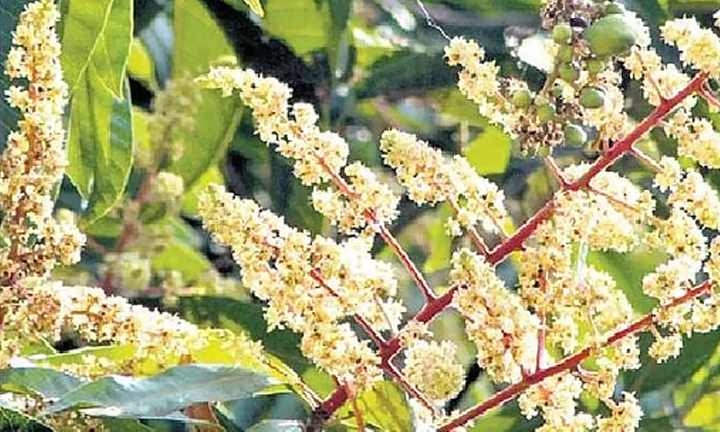
SOURCE: New Indian Express
Bountiful rain this year may not be of much help for mango growers in Karnataka. For, there may be a delay in mango flowering.
Usually, November-December is the flowering season in Ramanagara, Channapatna, Dharwad and other districts in North Karnataka. But in Kolar district, which accounts for around 70% of the state’s annual production, it will be from January to February. The Kolar region, however, has not received adequate rain and mango flowering here will not be affected.
The delay in flowering may also lead to a delayed harvest in mango-growing areas of the state except Kolar. Because of this, mangoes start arriving in markets after March and this may affect growers in Kolar, who also start harvesting by then.
Karnataka produces an average of 11 lakh tonnes of mangoes, grown on 1.39 lakh hectares during a normal year. Of this, around four lakh tonnes are sold to people directly. The remaining seven lakh tonnes go to industries where juice, jam, pickles and other items are made.
Mangoes will be available for several months after harvest because of the variation in flowering season in Karnataka — between November and December in Ramanagara, Channapatna, Dharwad and other districts in North Karnataka and between January and February in the Kolar region.
Raja Reddy, a mango grower from Srinivasapura in Kolar district, said the Kolar region received normal rainfall this year. There will be no change in the flowering pattern. It will happen in January-February and mangoes ripen by May.
But with continuous rain in other mango-growing areas of the state, there will be a delay there in flowering due to moisture in the soil.
“We may see mangoes from across the state arriving in markets at the same time. Moreover, the likely on-season may help growers harvest a bumper crop. Excess production may not be good news for growers as prices naturally come down,” he said.
“Last year, many companies could not export mango pulp to Europe and other countries as expected due to the conflicts in West Asia. Some companies still have pulp stocks and they may not buy more mangoes. This may also affect the growers,’’ Srinivasa Reddy, another mango grower from Malur, said.
Earlier, mangoes were grown only in Kolar and Ramanagara districts in the state. But now, they are grown in seven more districts, including Koppal, Dharwad and Belagavi. Earlier this year, the Andhra government decided to ban mangoes from Karnataka.
The AP government has established an agri-economic zone for pulp-making companies. But Karnataka has no such zone. “We have to depend on AP’s pulp-making firms. If the AP government imposes a ban on mangoes from Karnataka, we may have to dump our mangoes on the streets,’’ Mahesh PN, another mango grower from Kolar, said.