
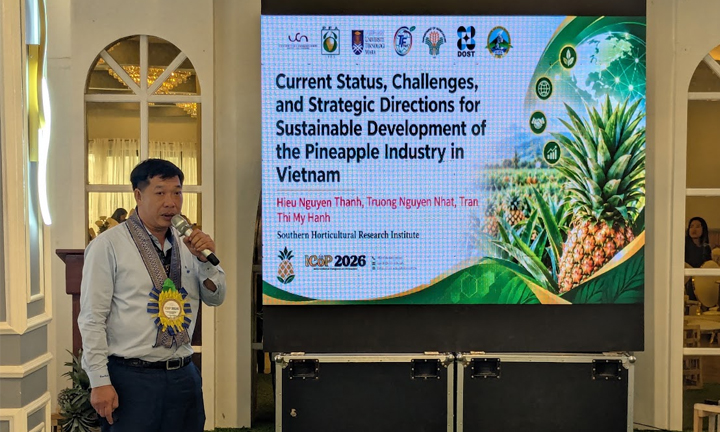
The International Tropical Fruits Network (TFNet) invited Dr. Nguyen Thanh Hieu, Acting Director General of the Southern Horticultural Research Institute (SOFRI) in Viet Nam, to deliver the 1st Plenary presentation during the 2nd International Congress on Pineapple (ICOP 2026) on 8-10 September 2026.
ICOP 2026 was hosted by the University of Camarines Norte (UCN) with TFNet as one of the co-organizers. Dr. Hieu represented SOFRI, which is an Associate Member of TFNet.
With the title “Current Status, Challenges, and Strategic Directions for Sustainable Development of the Pineapple Industry,” Dr. Hieu delivered an overview of the pineapple sector in Viet Nam.
In Vietnam, pineapple is the 9th most prolific tropical fruit crop grown in a total planting area of 55,143 ha. Farmers consider them easy to plant and grow, as they are low-maintenance, hardy, and drought tolerant.
Growing areas are concentrated in the Mekong River Delta, Central Highland, and the Northeast Mountain Regions. All areas grow the MD2 variety, but Queen pineapple is also grown in Mekong Delta and Cayenne pineapple is also grown in the Central Highlands.
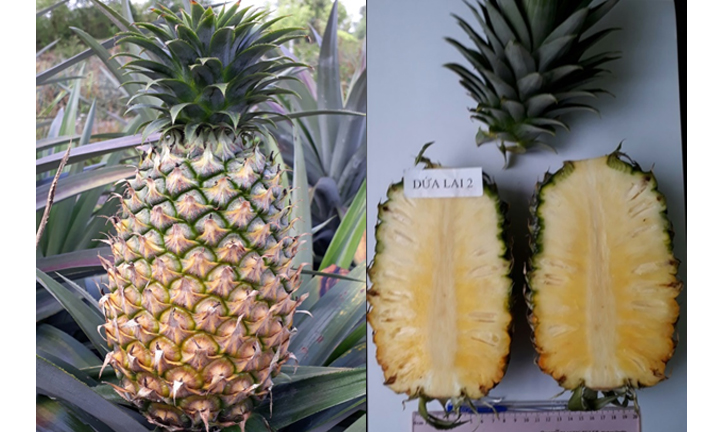
SOFRI has also developed the new LD13 variety, which is a crossbreed of a female Cayenne and a male Queen plant. This variety yields fruits with an average weight of 1.4 kg, with 68.53% edible flesh. It is distinctly sweet, with 17.65 total soluble solids, and rich in Vitamin C at 17mg per 100 ml of juice.
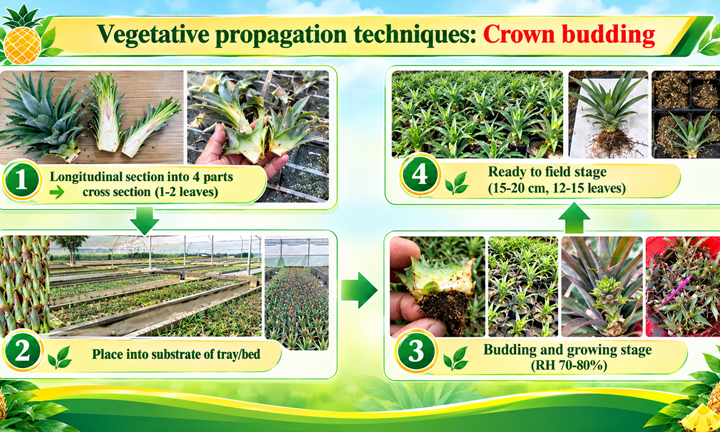
Dr. Hieu also explained the different propagation techniques to grow more pineapple plants in VietNam, mainly stem splitting, crown budding, tissue culture, and planting suckers and slips. He added the recommended spacing to achieve specific planting densities, particularly for 50,000-60,000 plants per hectare.
Pineapple plants are also sometimes intercropped in between areca palms and jackfruits to maximize farmer income.
For nutrient management, Dr. Hieu recommends foliar application of fertilizer 4 times per cycle and 6-8 times of fertigation per cycle. However, farmers should stop applying fertilizer 2-3 months before harvest time.
Depending on the variety, a combination of ethephon, thiourea, borax, urea, or calcium carbide may be used to induce flowering. The solution is applied directly to the center of the plant to achieve maximum results.
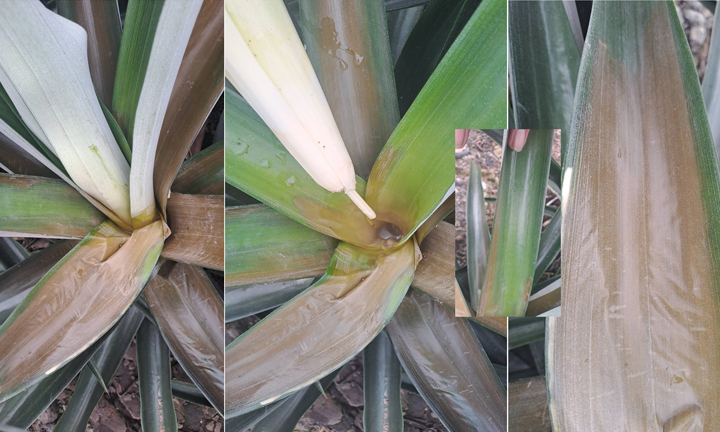
The most common pests and diseases identified in VietNam are heart rot caused by Phytophthora parasitica and P. cinnamomi, pineapple wilt caused by pineapple wilt virus transmitted by mealybugs, black rot caused by Thielaviopsis paradoxa, and pink disease caused by Pantoea citrea. Dr. Hieu provided symptoms to identify these diseases and their respective control measures.
For logistics to domestic markets, simple plastic bags are used to pack the pineapple fruits. Meanwhile, requirements for export depends on the country of destination. For instance, fruits sent to the Middle East are protected by foam sleeves and wrapped in plastic before boxing. Meanwhile, exports to Korea and Japan only use foam sleeves before boxing.
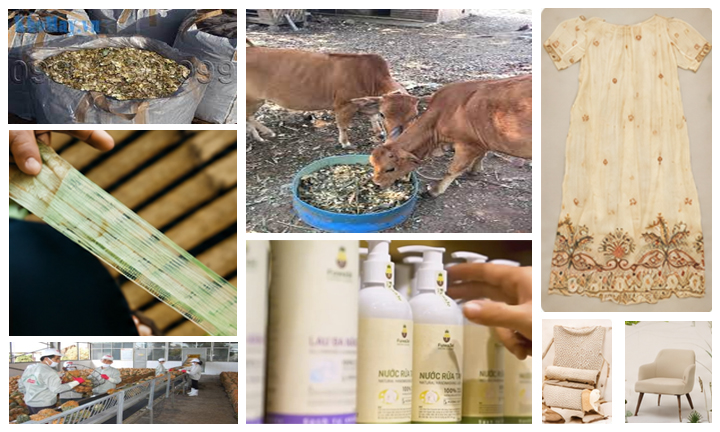
Finally, Dr. Hieu provided examples to reduce the agricultural waste from pineapples, including the formulation of animal feed, bio-based products such as detergents, organic fertilizer, and fiber.
Although VietNam is successfully growing and exporting pineapple fruits, there are still several challenges that the country needs to focus on to improve productivity. These include the use of inefficient propagation methods that lead to poor quality planting materials, limited farmer adoption of advanced technologies, increased incidence of pests and diseases, and improvement of postharvest storing and handling.