
The International Tropical Fruits Network (TFNet) invited Dr. Sobir, Researcher from Institut Pertanian Bogor (IPB) Indonesia, to deliver a plenary presentation during the 2nd International Congress on Pineapple (ICOP 2026) on 8-10 September 2026.
ICOP 2026 was hosted by the University of Camarines Norte (UCN) with TFNet as one of the co-organizers. Dr. Sobir is a resource person and a frequent collaborator with TFNet.
Dr. Sobir presented on the topic “Best Practices in Pineapple Production Systems: Balancing Productivity and Resource Sustainability in Indonesia.”
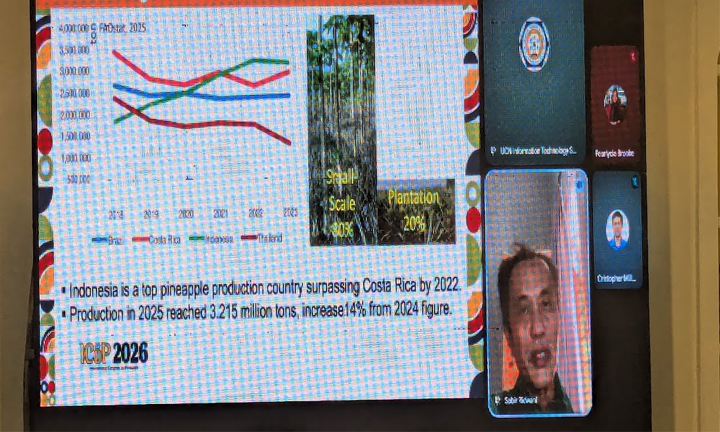
Indonesia is currently the top pineapple producer in the world, surpassing Costa Rica in 2022. In 2025, Indonesia produced 3.21 million tons of pineapple, which is 14% more than the previous year. However, most of the fruits are for domestic consumption with only 10,800 tons of fresh fruit exported in 2025.
Dr. Sobir attributed this increase in production to the implementation of Good Agricultural Practices (GAP).
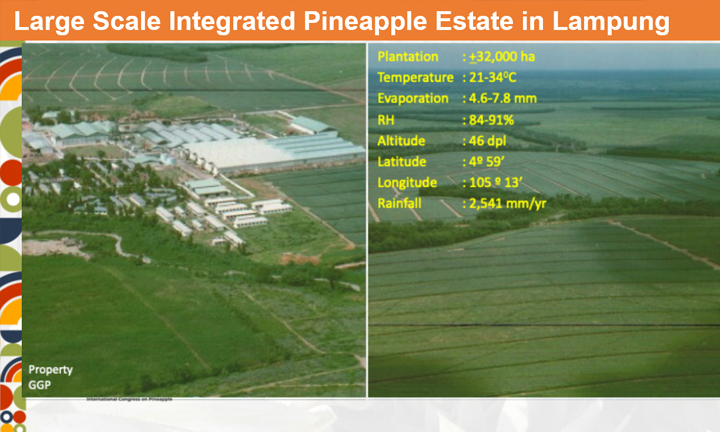
Most production is concentrated in the Island of Sumatra, particularly in Lampung province that houses large scale commercial plantations. They are also widely grown in Java.
Commercially grown pineapple varieties are specialized for specific growing areas, particularly for different soil types. However, they are mostly crossbred from Queen and Smooth Cayenne varieties.
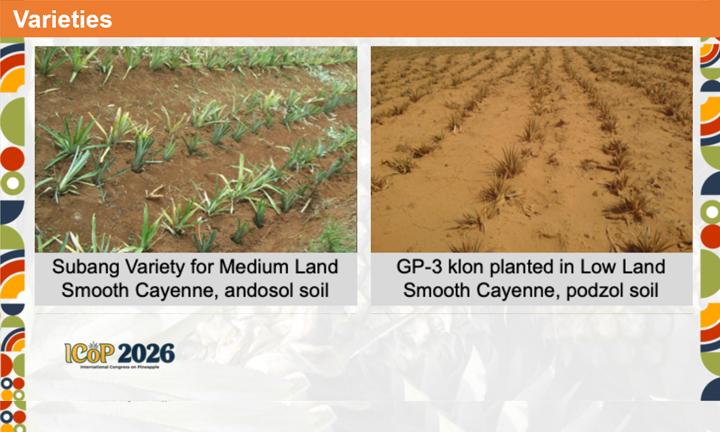
To speed up the cultivation of new plants, the newly developed varieties are propagated using stem cuttings, leaf sections, and tissue culture. The plant materials are dipped in pesticide to eliminate mealybugs, reducing the incidence of pineapple mealybug wilt-associated virus (PMWaV).
Another way to control the mealybug infestation is by releasing natural predators such as ants, specifically Pheidole sp. and T. melanocephalum.
Once the plants reach their optimum weight, flowering is forced by applying ethephon, ethylene and calcium carbide.
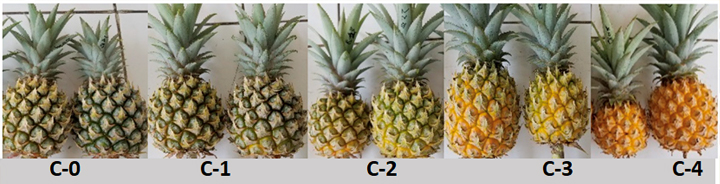
The proper time to harvest is dependent on the target market and supply chain needs. Fruits that are destined for export are harvested when the fruit is still green (C-0) but fruits for domestic markets can be allowed to ripen further.