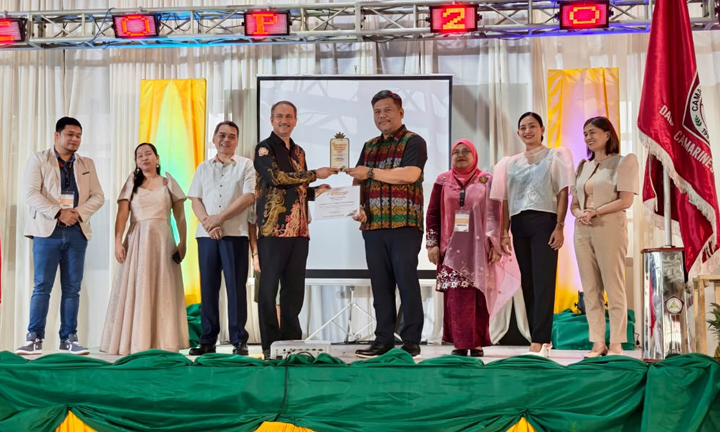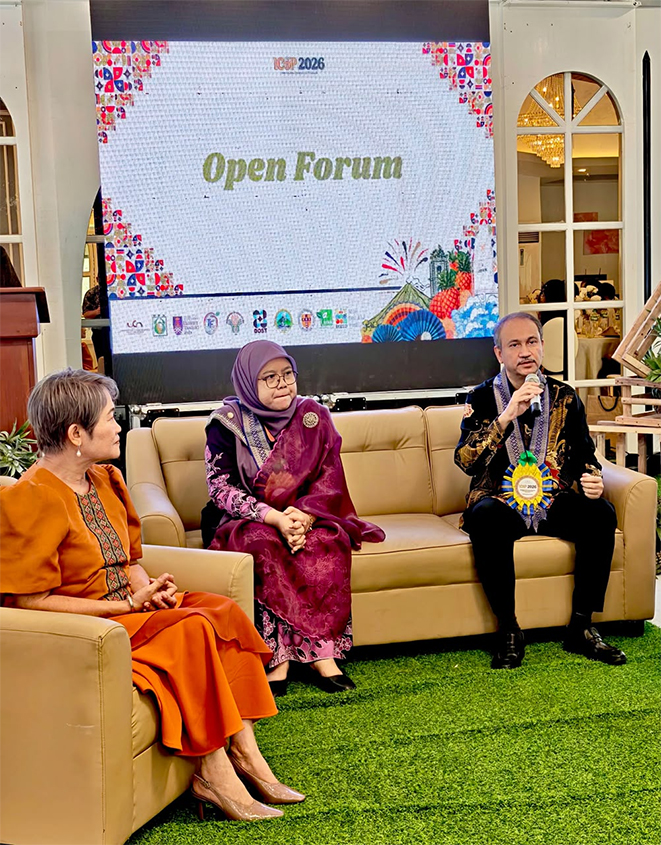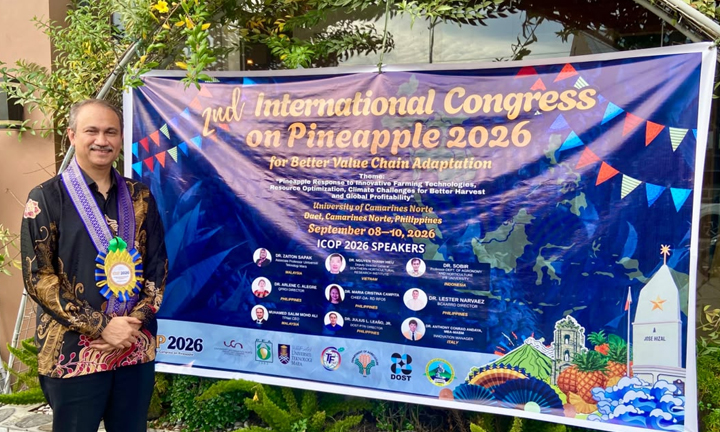
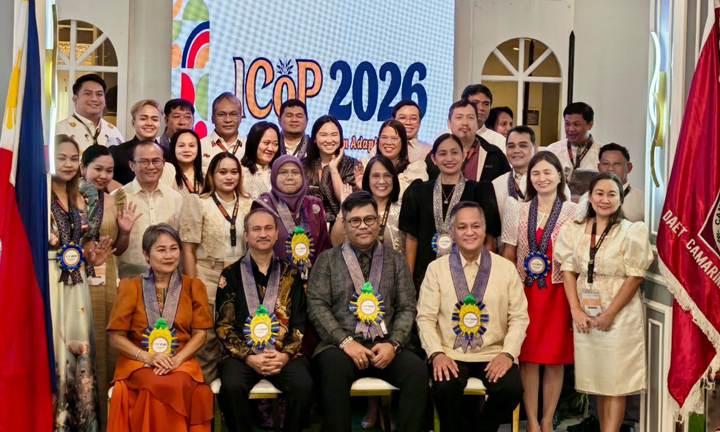
The University of Camarines Norte (UCN) opened its doors to host the 2nd International Congress on Pineapple (ICOP 2026) on 8-10 September 2026, co-organized by the International Tropical Fruits Network (TFNet), Universiti Teknologi MARA (UITM), Philippine Fruits Association (PFA), Department of Science and Technology (DOST), Bicol Consortium for Agriculture, Aquatic and Natural Resources Research and Development (BCAARD), and the Department of Agriculture (DA), Bicol Region.
The Congress was opened by Atty. Ryan L. Estevez, President of UCN.
“The 2nd International Congress on Pineapple represents a significant milestone in advancing global agricultural research, sustainability, and economic growth”, said Atty. Estevez.
He added, “Hosted in Camarines Norte, the proud home of the Queen Pineapple, this gathering highlights the vital connection between rich local heritage and global scientific progress.”
Bearing the theme, “Pineapple Response to Innovative Farming Technologies, Resource Optimization, and Climate Challenges for Better Harvest and Global Profitability,” the international congress aimed to gather various stakeholders and players from Southeast Asia to exchange knowledge, present research breakthroughs, and discuss emerging trends and innovations in the pineapple industry.
A total of 29 presentations were delivered during the Congress, divided into the following: 4 keynote presentations, 4 plenary presentations, 11 presentations in the research category, and 10 presentations in the development category.
As co-organizer, TFNet invited speakers from Member Countries such as Malaysia, Indonesia, and Vietnam to speak during the Keynote and Plenary Sessions during the first day, providing a general overview of the status and way forward for the pineapple industry.
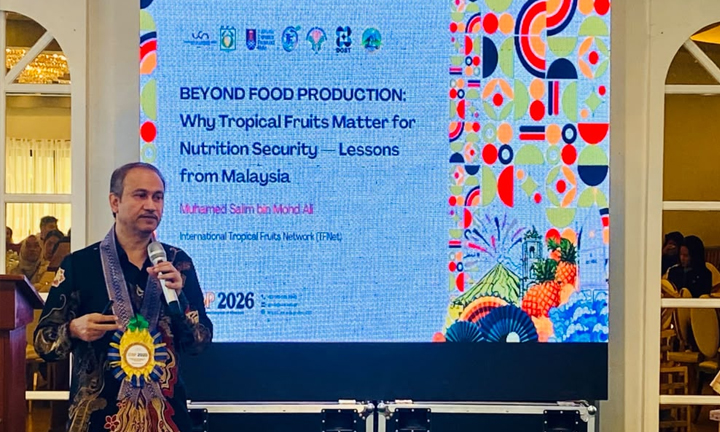
TFNet CEO Mr. Muhamed Salim bin Mohd Ali served as the 1st Keynote Speaker with “Beyond Food Production: Why Tropical Fruits Matter for Nutrition Security – Lessons from Malaysia.”
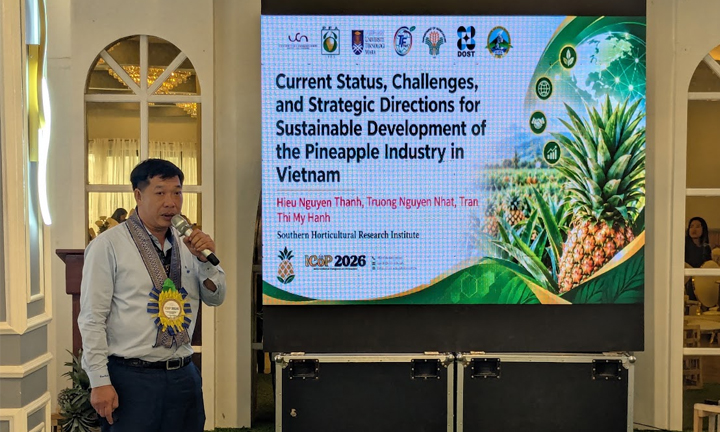
For the plenary session, Dr. Nguyen Thanh Hieu, Acting Director General of the Southern Horticultural Research Institute (SOFRI) in Vietnam, talked about the “Current Status, Challenges, and Strategic Directions for Sustainable Development of the Pineapple Industry.”
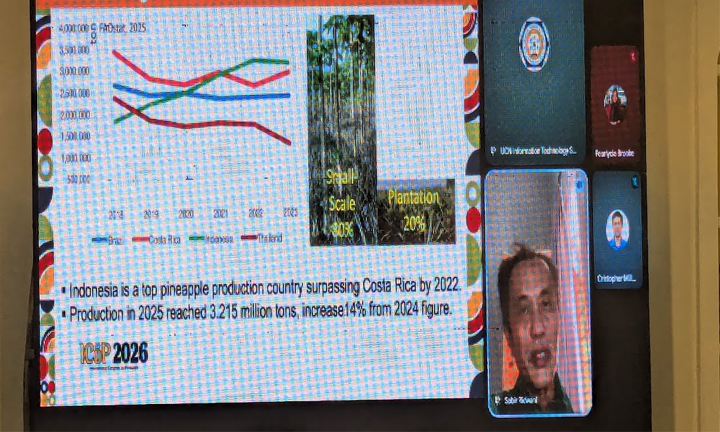
The second plenary speaker was Dr. Sobir, Researcher from Institut Pertanian Bogor (IPB), Indonesia, with the topic “Best Practices in Pineapple Production Systems: Balancing Productivity and Resource Sustainability in Indonesia.”
Meanwhile, the 2nd day included a farmers’ forum, an exhibition of innovation pineapple products, and technical presentations. Furthermore, the closing ceremonies and a field trip to a local pineapple farm were organized on the 3rd day.
Organizers hope that ICOP fostered the sharing of ideas, research findings, innovations, and best practices through the collaboration of international experts, researchers, farmers, and the private sector.