
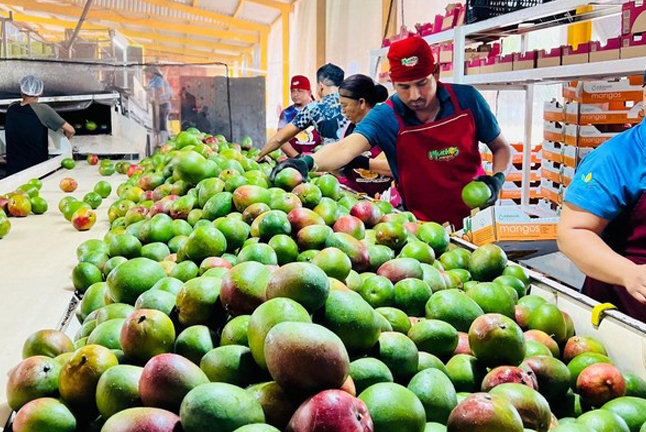
SOURCE: Freshplaza
Over the past four weeks, overall mango imports into the U.S. have been down despite an increase in supply from Brazil. Here is a look at what is happening in key mango-growing regions:
Brazil: “Brazil is currently the primary supplier of mangoes to the U.S. market, with season-to-date shipments running approximately 25 percent ahead of last year,” says Rob Ybarra of Chico Produce LLC, noting that fruit from Brazil is seeing stable pricing. “Because Ecuador faces a shortfall, we hope Brazil’s season extends into December.”\
Ecuador: Following Brazil is production from Ecuador which is set to begin in November. That’s when it will become the major seasonal supplier. However early crop projections indicate a potential 50 percent decrease, primarily due to El Niño and accompanying weather patterns.
Peru: Peru follows Ecuador and also typically begins in November. It too is facing potential production challenges with a crop projected to decline by more than 30 percent, though this is still only an early estimate. “This adds more uncertainty to the winter supply outlook,” says Ybarra, noting that Ecuador and Peru will supply the market until Mexico’s 2027 season starts. “We will monitor conditions closely and hope they improve.”
Mexico: While production of mangoes in Mexico is essentially finished for the season, looking back, it too had volume that was reportedly 40 percent below last year. Nayarit was hit hardest, declining by 70 percent.
What’s growing mango consumption
This tighter supply comes as consumption is growing on the fruit with the category attracting more consumers. “Better eating experiences drive sales, while growth in ready-to-eat and fresh-cut mangoes, along with positive social media coverage, will continue to support the category,” says Ybarra. “Many retailers are seeing category growth driven by the fruit’s full color and attractive blush. Customers buy with their eyes, and we expect this segment to continue expanding.”
As for pricing, it is reflecting supply and demand. While Brazil’s larger mangoes are priced in the teens above last year, smaller sizes are at or slightly below last year’s levels. “With Peru forecasting lower supply, prices will likely be higher than last year,” Ybarra says.
He does note that the industry’s biggest challenge is keeping mangoes on shopping lists as costs rise and consumers have less disposable income. “In order to offset this, we need to promote, promote, promote,” says Ybarra.
Optimism for 2027 in mangoes
Looking ahead, with those hopes that Brazil’s season extends until Peru and Ecuador enter the market and become the primary suppliers, the El Niño makes the outlook uncertain.
That said, the company remains optimistic about mangoes in 2027. “Early flowering and crop reports suggest Mexico’s season will be stronger than last year,” says Ybarra, noting that through its partnership with Vica Fruit and its established growers across Mexico’s mango-producing regions, Chico and Vica will be able to offer ripe and ready to eat fruit for the start of the Mexico season in 2027.